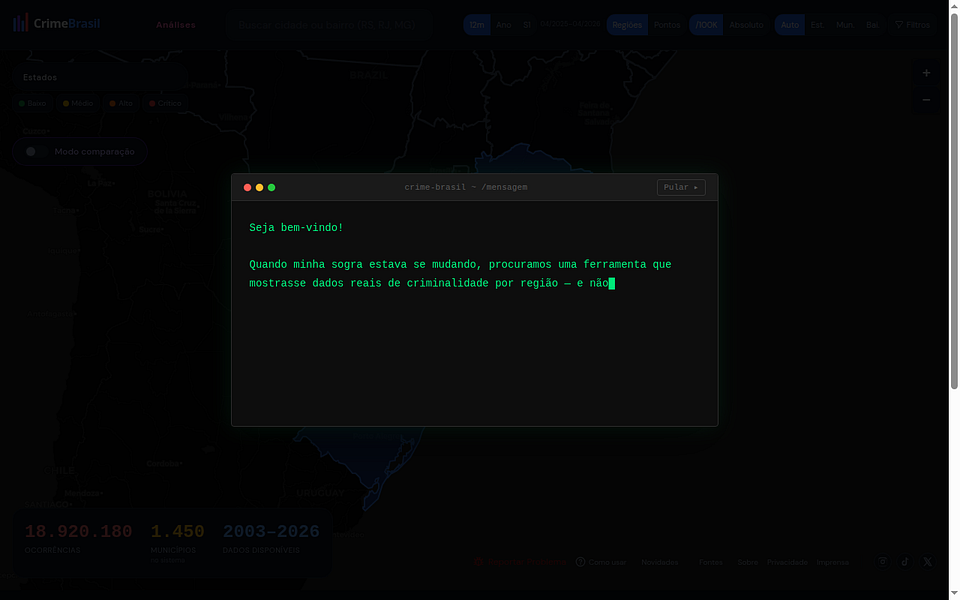
Crime Brasil – Explore crimes by neighborhood on the map with real data from SSP
Crime Brasil – Explore crimes by neighborhood on the map with real data from SSP: Navigate the map, filter by crime type, compare regions, and follow...

Key takeaways
- Use this as a buyer-focused guide for ai tool comparisons, not just a trend summary.
- Compare workflow fit, pricing risk, integrations, and alternatives before trying another tool.
- Check the FAQ section for final decision points before shortlisting.
The goal is not to chase every launch. The goal is to decide whether this product category can save time, improve output quality, reduce manual work, or replace tools already in the stack.
Quick verdict
Bottom line: Navigate the map, filter by crime type, compare regions, and follow historical series from 2003 to 2026.
What the source highlights
- Comparison signal: Navigate the map, filter by crime type, compare regions, and follow historical series from 2003 to 2026.
- Key detail 2: The platform helps you understand local risks and make informed decisions about housing, work, and travel.

Best for
This is most relevant for founders, creators, marketers, operators, sales teams, support teams, and small businesses comparing ai tool comparisons for real workflow gains.
Good-fit use cases usually include:
- Automation: repetitive work that currently depends on manual copy, research, or handoffs
- Output quality: content, analytics, customer communication, or internal operations that need faster execution
- Tool consolidation: several lightweight tools that could become one clearer workflow
- AI adoption: testing AI features before committing to a broader SaaS migration

Feature evaluation
When reviewing this tool or product category, focus on features that directly affect daily execution rather than impressive demos. The most useful comparison points are:
| Evaluation area | What to check |
|---|---|
| Core workflow | What job the tool completes from start to finish |
| Output quality | Whether results are reliable enough for professional use |
| Integrations | Whether it connects to systems the buyer already uses |
| Controls | Whether teams can manage prompts, permissions, brand rules, data, and approvals |
Comparison with alternatives
Compare this option against established AI tools, horizontal SaaS platforms, and manual workflows. A product is only worth recommending if it creates a clearer outcome than the alternatives readers already know.
Use this comparison checklist:
- Setup: ease of setup versus the learning curve
- AI quality: output quality versus editing effort
- Integrations: native integrations versus Zapier or manual exports
- Pricing: plan limits versus actual usage volume
- Switching cost: migration effort versus consolidation value

Pricing and buying signals
Before choosing a plan, check whether pricing is based on users, seats, credits, automation runs, AI usage, storage, or premium integrations. AI and SaaS pricing can look simple at first but become expensive when usage scales.
Pros and cons
Pros
- Useful for buyers actively comparing AI and SaaS tools
- Can reveal workflow gaps that existing software does not solve well
- Works well as part of a shortlist when paired with pricing and alternatives
Cons
- Launch announcements can move faster than real customer adoption
- Pricing, limits, and integrations may change quickly
- Some products overlap heavily with tools readers already use
Final recommendation
Shortlist this only if it solves a specific workflow better than the current tool stack. The best next step is to test one real use case, compare the result against two alternatives, and calculate whether the time saved or output improved justifies the subscription.
FAQ
Who should compare this type of tool?
Founders, operators, marketers, creators, and small teams that regularly evaluate AI and SaaS tools should compare it against both direct competitors and existing internal workflows.
What should I test before paying?
Check the core use case, pricing, integrations, data privacy, setup time, and whether the tool produces a repeatable outcome for your workflow.
Evaluation criteria
How to use this guide before buying software.
FAQ
How should I evaluate Crime Brasil – Explore crimes by neighborhood on the map with real data from SSP?+
Evaluate Crime Brasil – Explore crimes by neighborhood on the map with real data from SSP through workflow fit, pricing risk, integrations, alternatives, and whether it improves a real ai tool comparisons use case.
What should I compare before buying an AI or SaaS tool?+
Compare the product against direct competitors, built-in features inside tools you already use, and the current manual workflow before choosing a paid plan.
When should I skip a trending tool?+
Skip it when the use case is unclear, pricing limits are hard to verify, or the product duplicates a workflow your existing stack already handles well.