ElevateForward.ai – Connect diagnostics, strategy design, and execution into one system
ElevateForward.ai – Connect diagnostics, strategy design, and execution into one system: Invite your team, align KPIs, and refine decisions with...
Key takeaways
- Use this as a buyer-focused guide for ai tools, not just a trend summary.
- Compare workflow fit, pricing risk, integrations, and alternatives before trying another tool.
- Use the evaluation criteria below to turn the article into a shortlist decision.
ElevateForward.ai review: what it is and who it is for
ElevateForward.ai is a business strategy and execution platform listed on BetaList that aims to connect diagnostics, strategy design, and execution in one system. The product is positioned for leaders who need a clearer way to spot misalignment, set priorities, align KPIs, and move plans into execution.
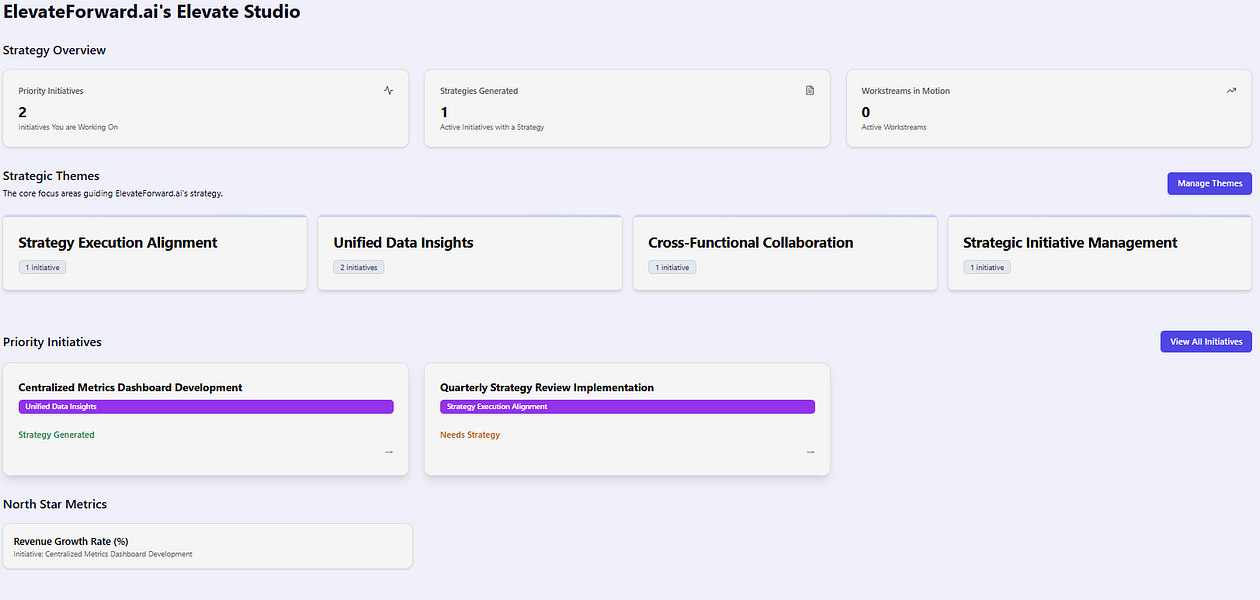
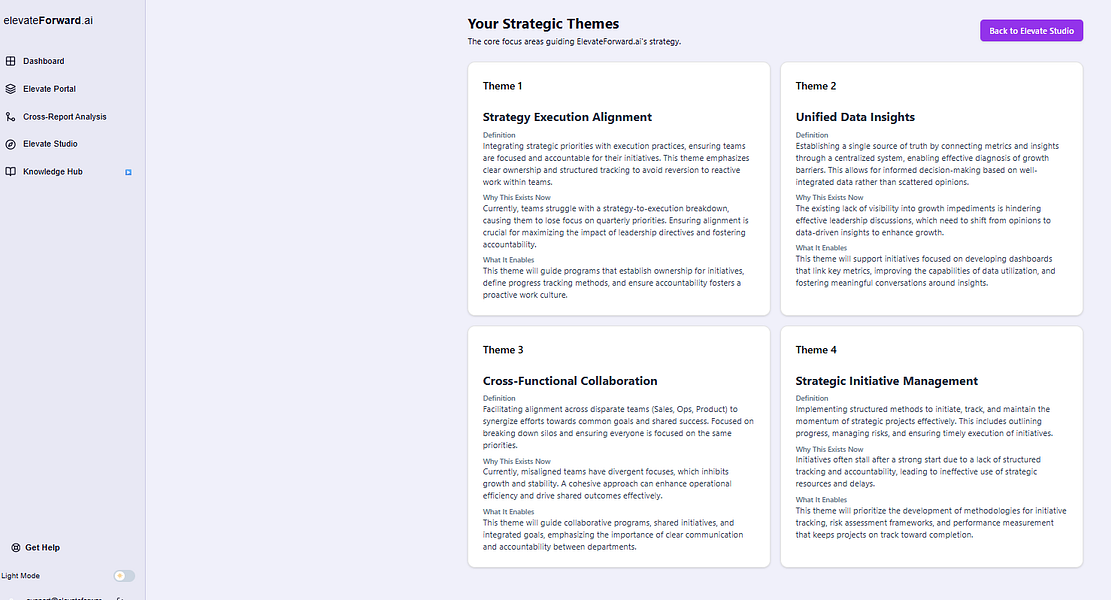
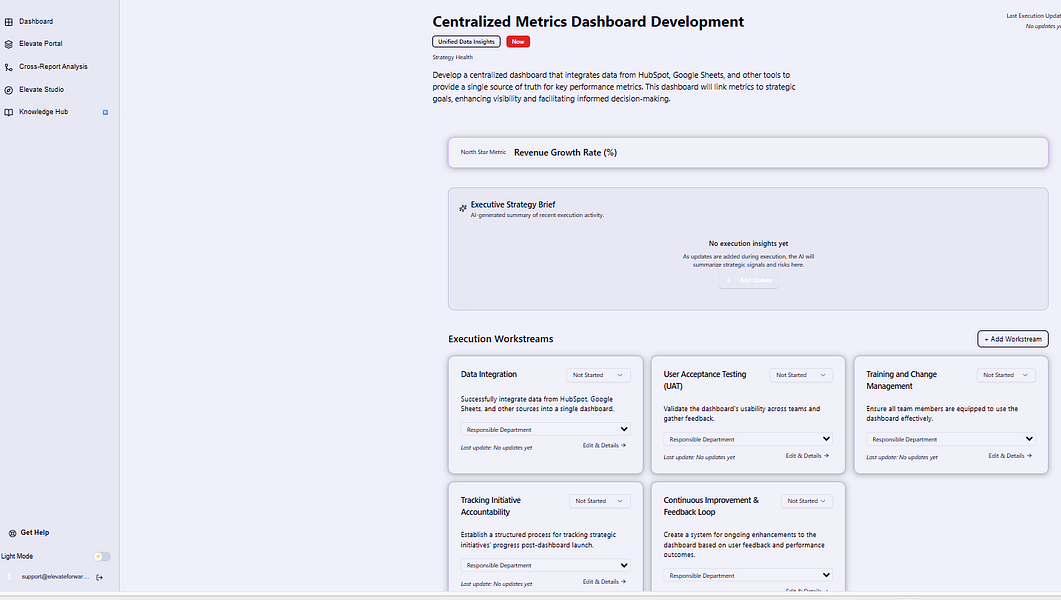
The core promise is practical: use guided Insight Reports and Elevate Studio to understand where teams are misaligned, translate priorities into 90-day roadmaps, and track progress in real time. The platform also includes team collaboration, cross-report intelligence, and AI assistance to help refine decisions.
ElevateForward.ai is designed to unify diagnostics, strategy design, and execution so leaders can gain clarity and move faster.

Key product details from the BetaList listing
| Area | What is stated | Buyer takeaway |
|---|---|---|
| Category | Business Intelligence, Portfolio Management, SaaS, Productivity Software, Business Productivity | It sits between strategy management, KPI alignment, and execution tracking. |
| Main workflow | Guided Insight Reports and Elevate Studio | Useful if your team needs structure before committing to plans. |
| Execution layer | Turn plans into 90-day roadmaps with real-time progress tracking | Good fit for quarterly planning and operating cadence reviews. |
| Collaboration | Invite your team and align KPIs | Designed for leadership teams rather than solo note-taking. |
| AI functionality | AI assistance and cross-report intelligence | May help connect insights across multiple reports, but buyers should validate depth in a demo. |
| Pricing | Not provided in the source listing | Teams should request pricing and confirm seat, workspace, and reporting limits. |
How ElevateForward.ai appears to work
Based on the available listing, ElevateForward.ai is not just a dashboard tool. It appears to combine three connected stages:
- Diagnostics: Use guided Insight Reports to identify issues such as misalignment, unclear priorities, or gaps between teams.
- Strategy design: Use Elevate Studio to shape priorities and clarify what the organization should focus on.
- Execution: Convert strategic plans into 90-day roadmaps and monitor progress as work moves forward.
This matters because many strategy tools stop at documentation, while many project management tools start after the strategy is already decided. ElevateForward.ai is positioned in the middle: it helps leaders move from diagnosis to decision to action.
Where the workflow value may be strongest
1. Leadership teams trying to reduce strategic misalignment
The product’s strongest stated use case is helping teams spot misalignment. That makes it relevant for founders, executives, department heads, and operating teams that regularly struggle with different interpretations of the same goals.
If your quarterly planning meetings often produce long documents but weak follow-through, a system that connects reports, KPIs, priorities, and roadmaps could create more accountability.
2. Organizations that plan in 90-day cycles
ElevateForward.ai specifically mentions turning plans into 90-day roadmaps. That suggests a good fit for companies using quarterly OKRs, strategic initiatives, or short operating cycles.
For buyers, the key question is whether the roadmap functionality is detailed enough for your operating rhythm. Some teams need lightweight milestone tracking; others need dependencies, owners, risk scoring, integrations, and status rollups.
3. Teams that want AI support without replacing human strategy
The listing references AI assistance and cross-report intelligence. In a strategy context, this is most useful when AI helps connect patterns across reports, highlights inconsistencies, or prompts better decision-making.
Buyers should be careful not to treat AI assistance as a substitute for leadership judgment. The more valuable use case is likely decision support: helping teams compare inputs, surface blind spots, and refine plans faster.
What to verify before shortlisting ElevateForward.ai
The BetaList listing gives a clear overview, but it does not include implementation detail, pricing, integrations, security information, or customer examples. Before moving ElevateForward.ai onto a procurement shortlist, ask targeted questions.
- Pricing model: Is pricing per user, per team, per workspace, or usage-based?
- Report limits: Are there limits on Insight Reports, roadmaps, AI usage, or historical data?
- KPI structure: Can KPIs be customized by team, department, time period, and initiative?
- Roadmap ownership: Can each 90-day roadmap item have owners, due dates, status, dependencies, and commentary?
- Progress tracking: What does “real-time progress tracking” depend on? Manual updates, integrations, or automated data feeds?
- Collaboration controls: What permissions exist for executives, managers, contributors, and external advisors?
- AI transparency: How does the AI assistance generate recommendations, summaries, or cross-report insights?
- Data security: What security, compliance, and data retention options are available?
Pricing risks and buying considerations
No pricing details are provided in the source listing. That creates a few common SaaS buying risks, especially for leadership and strategy platforms.
| Risk | Why it matters | How to reduce it |
|---|---|---|
| Seat expansion cost | Strategy platforms often begin with leadership but expand to managers and project owners. | Ask for pricing at your expected 12-month user count, not just the pilot size. |
| AI usage limits | AI assistance may be capped or tiered depending on vendor pricing. | Confirm whether AI features are included, metered, or restricted by plan. |
| Roadmap scale | Some tools handle a few initiatives well but become harder to manage at portfolio scale. | Test with a real quarterly planning cycle before committing annually. |
| Integration gaps | Execution tracking may require connections to task, BI, or collaboration tools. | Ask which integrations are available and what must be updated manually. |
| Change management | Strategy tools fail if teams do not adopt the planning cadence. | Assign an internal owner and define how often reports, KPIs, and roadmaps are reviewed. |
ElevateForward.ai vs. common alternatives
ElevateForward.ai should be compared against several categories, not just one direct competitor. Its value depends on whether you need connected diagnostics, planning, and execution in a single workflow.
Compared with project management tools
Tools such as general task boards and project trackers are usually stronger for day-to-day execution. However, they may not help diagnose strategic misalignment or design priorities before the work begins. ElevateForward.ai appears more suitable when leadership needs to connect strategic reasoning with execution.
Compared with BI dashboards
Business intelligence tools are useful for reporting metrics, but they often do not guide leaders through priority-setting or roadmap creation. ElevateForward.ai’s stated focus on Insight Reports, KPI alignment, and cross-report intelligence may make it more action-oriented than a passive dashboard.
Compared with OKR software
OKR tools help define objectives and key results, but not all include diagnostics or guided strategy design. If ElevateForward.ai’s guided reports are strong, it may be useful for teams that need help deciding what the OKRs should be, not just tracking them after approval.
Compared with strategy consulting templates
Templates and workshops can help teams align once, but they often lack ongoing progress tracking. ElevateForward.ai may be a better fit if you want a repeatable operating system for planning and review cycles.
Best-fit buyers
- Startup and scaleup leadership teams that need a clearer bridge between strategy sessions and execution.
- Operators and chiefs of staff responsible for quarterly planning, KPI alignment, and initiative tracking.
- Department leaders who need to coordinate priorities across teams and reduce duplicated or conflicting work.
- Portfolio or business productivity teams looking for a structured system to connect insights, decisions, and roadmaps.
Who may not need it
- Solo founders or very small teams that can manage strategy with simple documents and weekly check-ins.
- Teams that only need task execution and already have clear strategy, KPIs, and ownership.
- Organizations requiring mature enterprise procurement details immediately, since the available listing does not provide pricing, compliance, or deployment specifics.
- Companies with deeply customized planning systems that may need extensive integrations before adopting another platform.
Demo checklist
If you evaluate ElevateForward.ai, use a real planning scenario rather than a generic demo. Bring one current strategic priority, a few KPIs, and an example of team misalignment. Then ask the vendor to show the complete workflow.
- How does an Insight Report get created?
- What does Elevate Studio add to the planning process?
- How are priorities converted into a 90-day roadmap?
- How are KPI owners assigned and reviewed?
- What does cross-report intelligence reveal that a normal report would not?
- Where does AI assistance appear in the workflow?
- How is real-time progress tracking updated?
- Can executives see a high-level view while teams manage detailed work?
Verdict: should you shortlist ElevateForward.ai?
ElevateForward.ai is worth shortlisting if your team needs a more connected way to move from diagnosis to strategy to execution. The BetaList listing points to a practical workflow: guided Insight Reports, Elevate Studio, KPI alignment, AI assistance, cross-report intelligence, 90-day roadmaps, and real-time progress tracking.
The main caution is that important buying details are not available in the source listing, including pricing, integrations, security, customer proof, and plan limits. For that reason, ElevateForward.ai is best approached as a promising early evaluation candidate rather than an automatic purchase.
For leadership teams that already feel the cost of misalignment, the category fit is strong. The next step is to validate whether the product’s AI assistance, reporting workflow, and execution tracking are deep enough for your planning cadence and budget.
Evaluation criteria