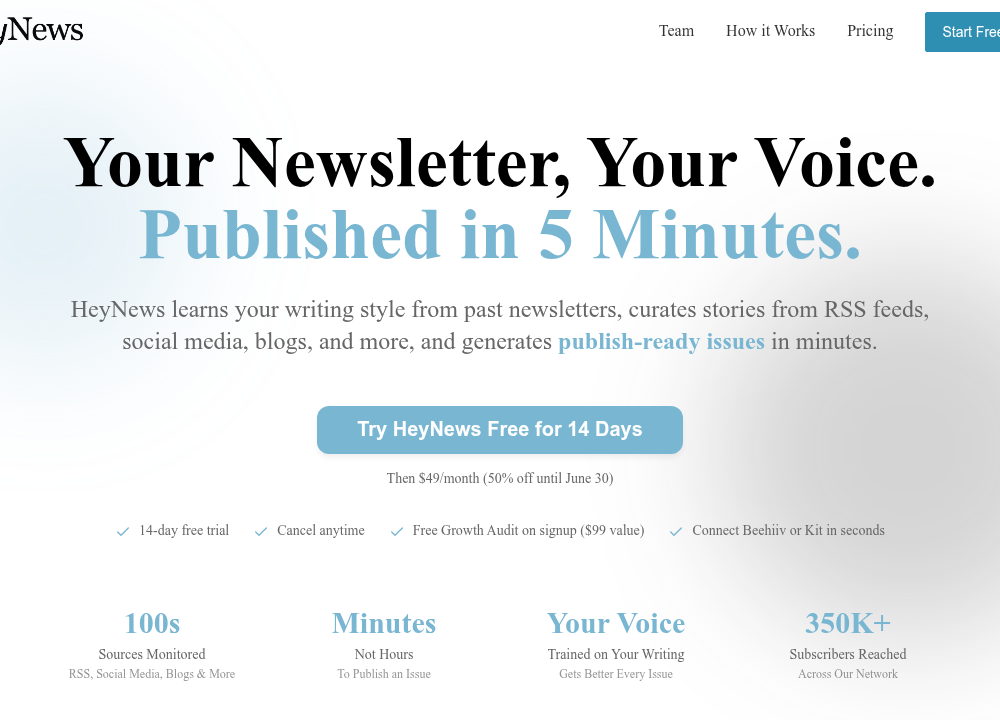
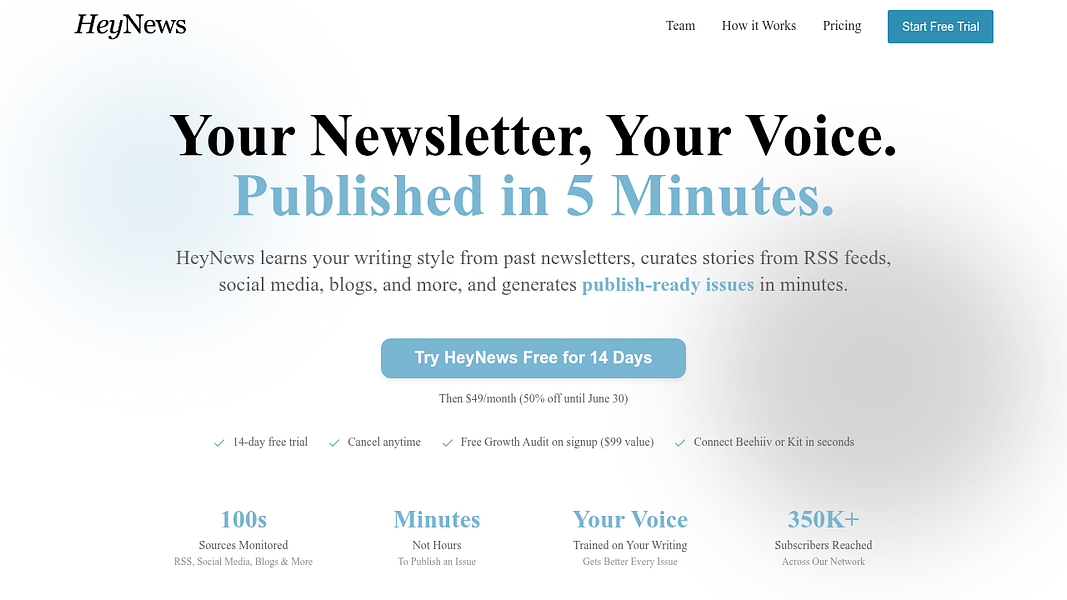
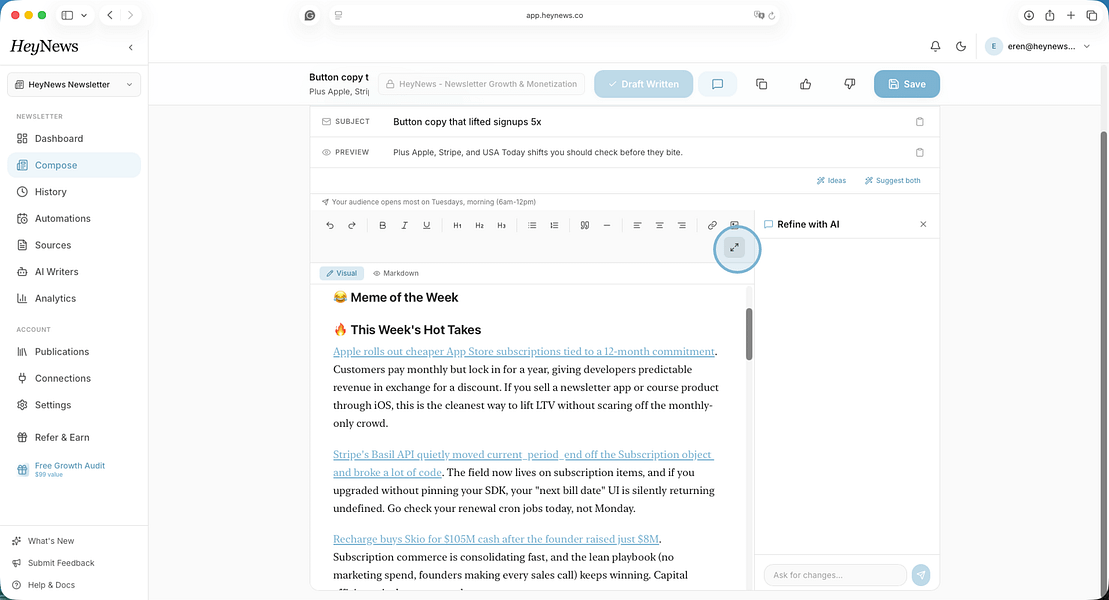
HeyNews – Drafts your newsletter in your voice by learning from past issues
HeyNews – Drafts your newsletter in your voice by learning from past issues: It reads your past issues, learns your tone and signature phrases, pulls...
Key takeaways
- Use this as a buyer-focused guide for ai tool reviews, not just a trend summary.
- Compare workflow fit, pricing risk, integrations, and alternatives before trying another tool.
- Check the FAQ section for final decision points before shortlisting.
For AI and SaaS products, the first question is not whether the launch sounds impressive. The useful question is whether the product can remove friction from a workflow that already matters.
Who should look closely
HeyNews – Drafts your newsletter in your voice by learning from past issues is most relevant for teams that already feel a clear bottleneck in ai tool reviews, especially when manual work, scattered tools, or inconsistent output quality are slowing execution.
- Small teams: when one tool can reduce repeated setup or handoffs
- Creators and marketers: when speed, repeatable output, and review workflows matter
- Operators: when data, approvals, and integrations are part of the buying decision
- Founders: when a tool can replace a fragile manual process without adding complexity

What the source suggests
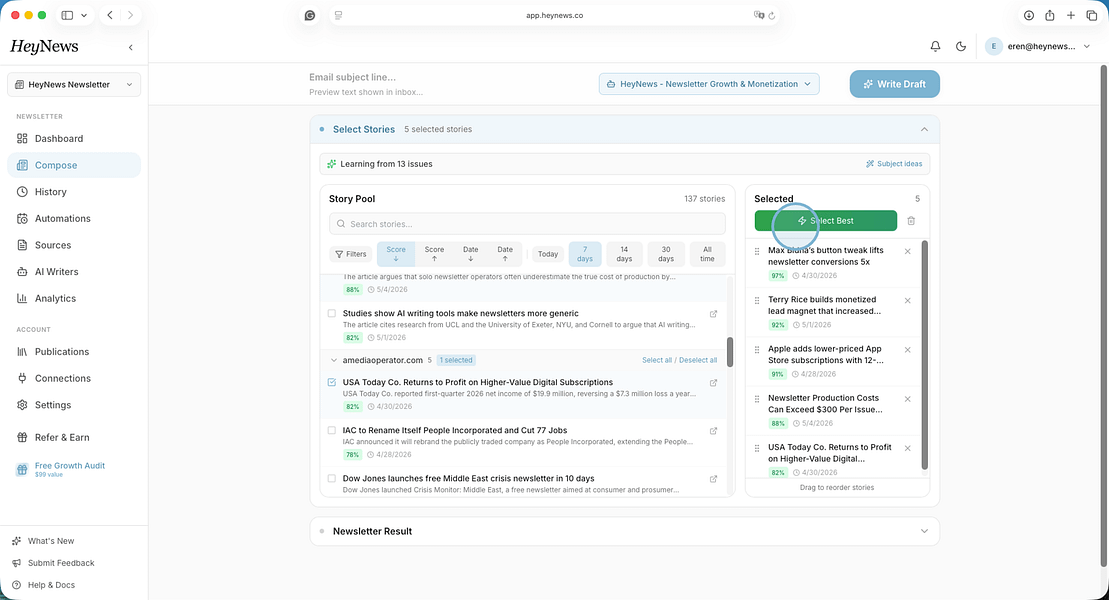
Summary: It reads your past issues, learns your tone and signature phrases, pulls stories from your sources (RSS, blogs, social profiles, Reddit, Chrome extension), scores them against your audience, and drafts your next issue in your voice.
What the source highlights
- Key detail 1: It reads your past issues, learns your tone and signature phrases, pulls stories from your sources (RSS, blogs, social profiles, Reddit, Chrome extension), scores them against your audience, and drafts your next issue in your voice.
- Key detail 2: Different edition types get different writers, so a Monday deep dive and a Friday roundup keep their own style.
Fit checklist
| Question | Why it matters |
|---|---|
| Does it solve a frequent task? | Occasional use rarely justifies another subscription. |
| Does it improve quality or speed? | The value should be visible in output, time saved, or fewer handoffs. |
| Can the team control the workflow? | AI tools need permissions, review steps, and predictable outputs. |
| Can it replace something? | The strongest SaaS purchases reduce complexity instead of adding it. |
Alternatives to compare
Compare this product against three groups: direct AI competitors, broader SaaS suites that already include similar features, and the manual process the team uses today.
- Direct competitor: usually stronger on one narrow AI workflow
- Existing SaaS suite: often weaker on AI depth but easier to adopt
- Manual workflow: slower, but sometimes more flexible and cheaper
Pricing risk
Pay attention to whether pricing scales by seat, credits, AI usage, automations, storage, or premium integrations. The cheapest plan is not always the best comparison point if the real workflow requires higher usage limits.
Pros and cons
Pros
- Useful if the team has a clear workflow pain point
- Can help compare AI products beyond launch hype
- Works well when evaluated against current tools and manual processes
Cons
- May overlap with features already available in existing SaaS tools
- Pricing can become unclear when AI usage scales
- Source announcements may not prove long-term product quality
Recommendation
Shortlist it only if the workflow pain is already real. If the team cannot name the task it will replace or improve, compare alternatives first and wait until there is a clearer operational need.
Evaluation criteria
How to use this guide before buying software.
FAQ
How should I evaluate HeyNews – Drafts your newsletter in your voice by learning from past issues?+
Evaluate HeyNews – Drafts your newsletter in your voice by learning from past issues through workflow fit, pricing risk, integrations, alternatives, and whether it improves a real ai tool reviews use case.
What should I compare before buying an AI or SaaS tool?+
Compare the product against direct competitors, built-in features inside tools you already use, and the current manual workflow before choosing a paid plan.
When should I skip a trending tool?+
Skip it when the use case is unclear, pricing limits are hard to verify, or the product duplicates a workflow your existing stack already handles well.