Build apps from prompts, without starting from a blank codebase.
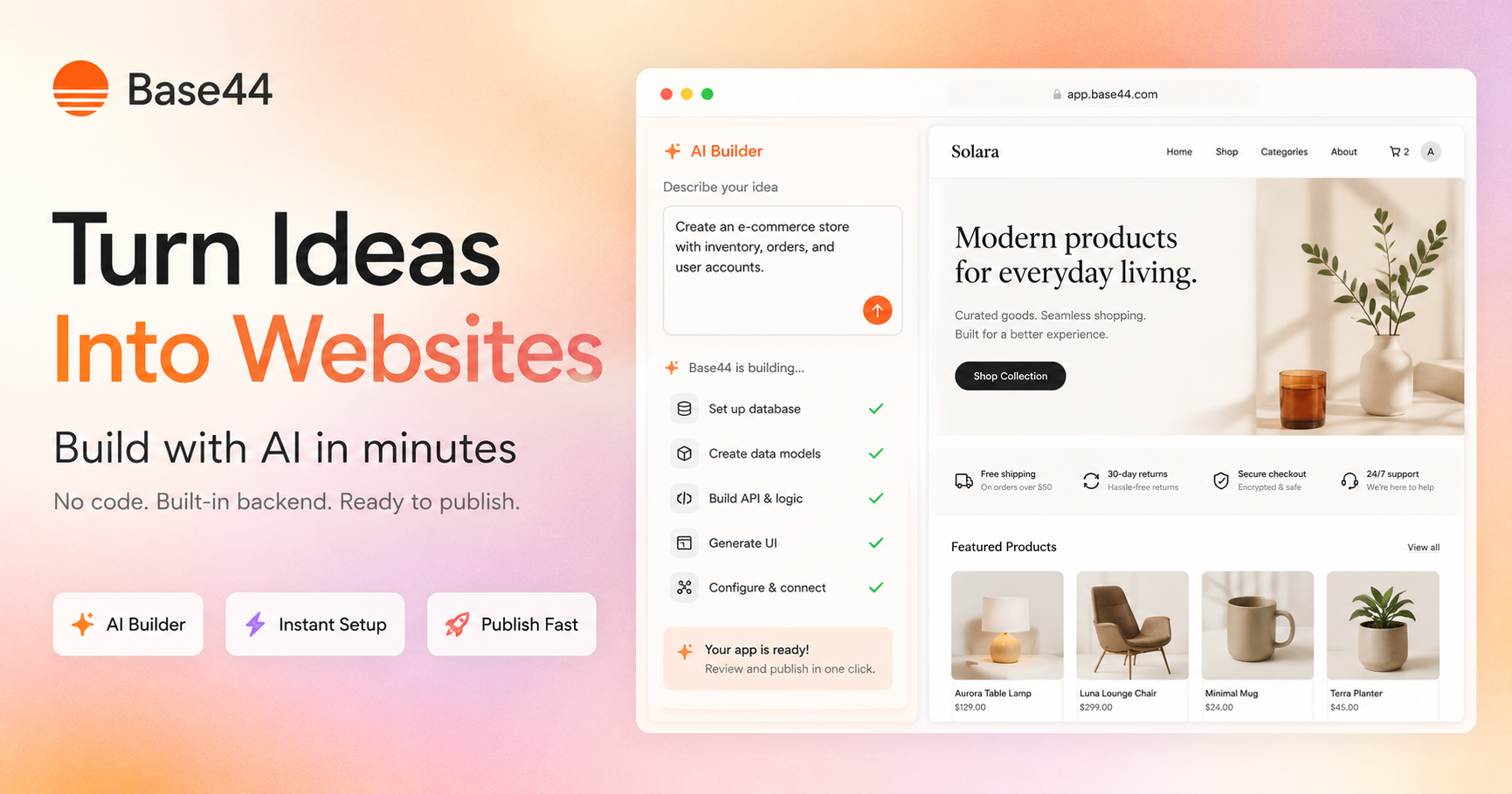
Base44 is an AI app builder designed for people who want to turn plain-English ideas into working apps, dashboards, portals, and workflow tools. This review helps you decide whether it fits your MVP, internal tool, or SaaS prototype before you commit.
Quick verdict: who should try Base44?
Base44 appears best for buyers who want to test an app idea quickly, build a practical workflow tool, or create a working prototype without manually wiring up a full stack.
Recommendation level
Use the free tier or a smaller paid plan to test whether Base44 handles your workflow, integrations, and iteration style well enough before scaling.
What Base44 appears to help you build
Base44 is not just a page generator. Its positioning is closer to an AI software builder that can draft interfaces, backend logic, app flows, and connected workflows.

Prompt-to-app creation
Describe the app you want, then refine screens, flows, and behavior through conversation instead of starting with a blank repository.

Backend generated with the app
Useful when your app needs login, database records, permissions, product catalogs, orders, or other business logic.
Publish and share faster
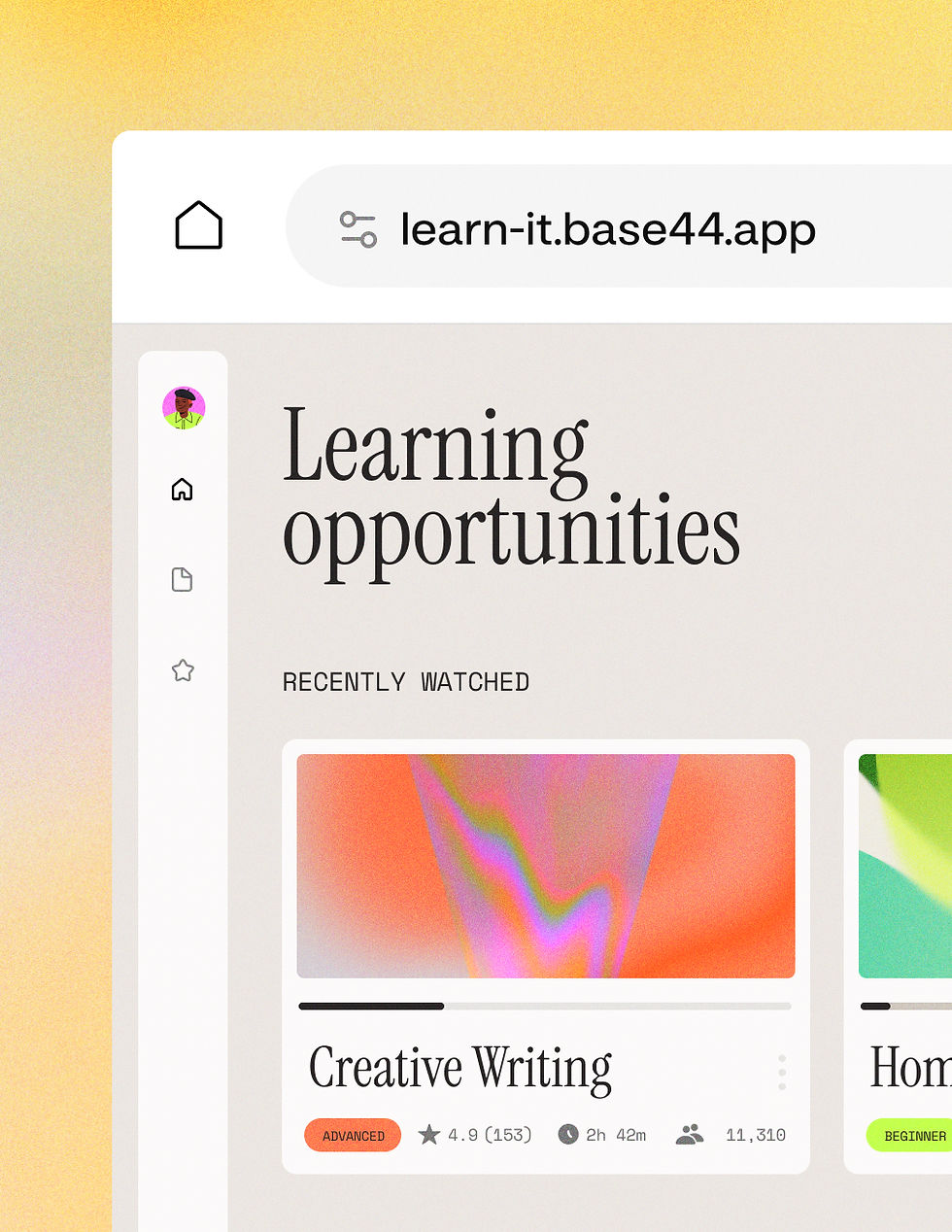
The workflow is designed to reduce deployment setup, so teams can test ideas with real users sooner.

Connectors and agents
Base44’s broader ecosystem points toward connected workflows, automations, and AI agents that work with your tools.
Where Base44 can make sense
The strongest buying case is not “AI replaces developers.” It is “AI reduces the time between idea, working prototype, and useful internal workflow.”
Internal operations tools
Build task trackers, approval flows, admin panels, scheduling boards, and team dashboards when spreadsheets are becoming too messy.
Customer portals
Create basic client dashboards, onboarding portals, request forms, reporting views, or self-service workflows for small business teams.
MVP validation
Turn a product idea into a clickable and functional app faster, then validate whether users actually want the workflow before hiring a full team.
Analytics and reporting apps
Prototype dashboards for finance, sales, support, operations, or product teams that need structured views of changing data.
Workflow automation
Connect apps with tools like email, calendars, CRMs, spreadsheets, docs, or messaging systems to reduce repetitive handoffs.
AI-enabled business apps
Experiment with apps that use AI for summaries, assistant workflows, generated content, notifications, or guided user interactions.

Feature breakdown for real buyers
A buyer should evaluate Base44 by workflow outcomes: speed, backend setup, app ownership, integrations, team use, and operational risk.
Pros and cons of Base44
Base44 is attractive because it compresses several app-building steps into one workflow. The tradeoff is that buyers still need to validate pricing, security, data access, and long-term technical control.
Pros
- Fast path from plain-English idea to working app draft.
- Built-in backend approach can reduce setup friction for auth, database, storage, and hosting.
- Useful for internal tools, portals, dashboards, prototypes, and business workflows.
- Free tier makes initial testing possible before paying.
- Integrations and connectors can help apps work with existing business tools.
- Good fit for non-technical users who can clearly describe process logic.
Cons
- Credit-based pricing can become harder to predict during heavy iteration.
- Complex apps still require careful product thinking, testing, and sometimes developer review.
- Security, privacy, app visibility, and permissions must be reviewed before using sensitive data.
- Some teams may prefer deeper code control from tools like Replit, Bolt.new, Cursor, or a traditional stack.
- Integration availability, plan limits, and regional availability may vary, so verify official details before committing.
Base44 vs alternatives
Choose Base44 when you want a guided all-in-one app builder. Choose another tool when you need stronger developer control, UI-only generation, or a more traditional no-code database/app workflow.
| Tool | Best fit | Choose it when... | Consider another option when... |
|---|---|---|---|
| Base44 | Prompt-based app building with backend, hosting, integrations, and workflow logic. | You want to move from app idea to usable MVP or internal tool quickly. | You need total architecture control or complex custom engineering from day one. |
| Lovable | AI-generated apps and websites with a strong no-code/simple prompt experience. | You want a popular AI app builder for fast app and website creation. | Your priority is backend governance, app security review, or custom infrastructure details. |
| Bolt.new | Browser-based AI web development and full-stack app prototyping. | You want more hands-on code visibility while still prompting an AI builder. | You prefer a more business-user-friendly, managed no-code style workflow. |
| Replit Agent | AI-assisted software creation inside a developer-friendly cloud workspace. | You or your team can work closer to code, deployment, debugging, and dev workflows. | You want a simpler buyer/operator experience with fewer dev environment concepts. |
| Vercel v0 | AI-generated UI, websites, components, and front-end app experiences. | You need polished interface generation and React/front-end starting points. | You need a fuller business app builder with backend, database, and operational workflows. |
| Bubble / Glide | Traditional no-code app creation with visual workflows and data models. | You prefer visual building, established no-code patterns, and less AI-led generation. | You want to generate app drafts from natural language more aggressively. |
Questions to answer before buying Base44
Use this checklist before choosing any AI app builder. It helps prevent wasted credits, mismatched workflows, and security surprises.
Try Base44 if your next bottleneck is speed, not imagination.
Base44 is worth testing when you need a working app draft, internal workflow, portal, or MVP quickly. Start small, verify pricing and security, then scale only if the generated app fits your real workflow.
Disclosure: this recommendation may include an affiliate relationship. Always check the official Base44 site for current pricing, credits, security details, and terms.
Base44 frequently asked questions
What is Base44?
Base44 is an AI app builder that lets users describe apps, websites, portals, dashboards, and workflow tools in plain English. It is designed to generate app structure, UI, logic, and backend pieces so users can iterate faster than a traditional build process.
Is Base44 free?
Base44 has a free tier, but it uses message credits and integration credits. Treat the free plan as a test environment for validating fit, not as unlimited production capacity.
How much does Base44 cost?
Official pricing can change, but Base44 lists free and paid plans with different monthly credit allowances. Check the official pricing page before buying because billing period, promotions, credits, and included features may change.
Who is Base44 best for?
Base44 is best for founders, operators, product managers, small teams, and non-technical builders who can describe a workflow clearly and want to test an app idea, internal tool, portal, or dashboard quickly.
What are the biggest Base44 limitations?
The main limitations are credit predictability, the need to test AI-generated logic carefully, possible plan limits, and the need to review data privacy, security, integrations, and export options before using it for production workflows.
Is Base44 better than Lovable, Bolt.new, Replit, or v0?
It depends on the job. Choose Base44 for an all-in-one app-builder workflow with backend and business app focus. Choose v0 for front-end/UI generation, Bolt.new or Replit for more developer-oriented code workflows, and Bubble or Glide for traditional no-code visual building.
Can Base44 be used for real business apps?
Base44 is designed for functional apps and business workflows, but buyers should test generated apps, validate permissions, review security settings, and confirm whether their plan supports the required scale, support, and governance.
Is Base44 secure enough for sensitive data?
Base44 lists security controls and compliance signals, but sensitive use cases require extra diligence. Review the official security documentation, app visibility, row-level permissions, SSO options, subprocessors, and your own compliance requirements before adding sensitive data.